



Solid Timber vs Engineered Timber Flooring: Which Is Right for Your Home?
When choosing timber flooring, many Australian homeowners find themselves deciding between solid timber flooring and engineered timber flooring. Both options offer the natural beauty of real wood, but they perform very differently depending on climate, budget, and lifestyle.
In this guide, we’ll compare solid timber and engineered timber flooring, explore the pros and cons of each, and explain which option is best for different situations in Australian homes.
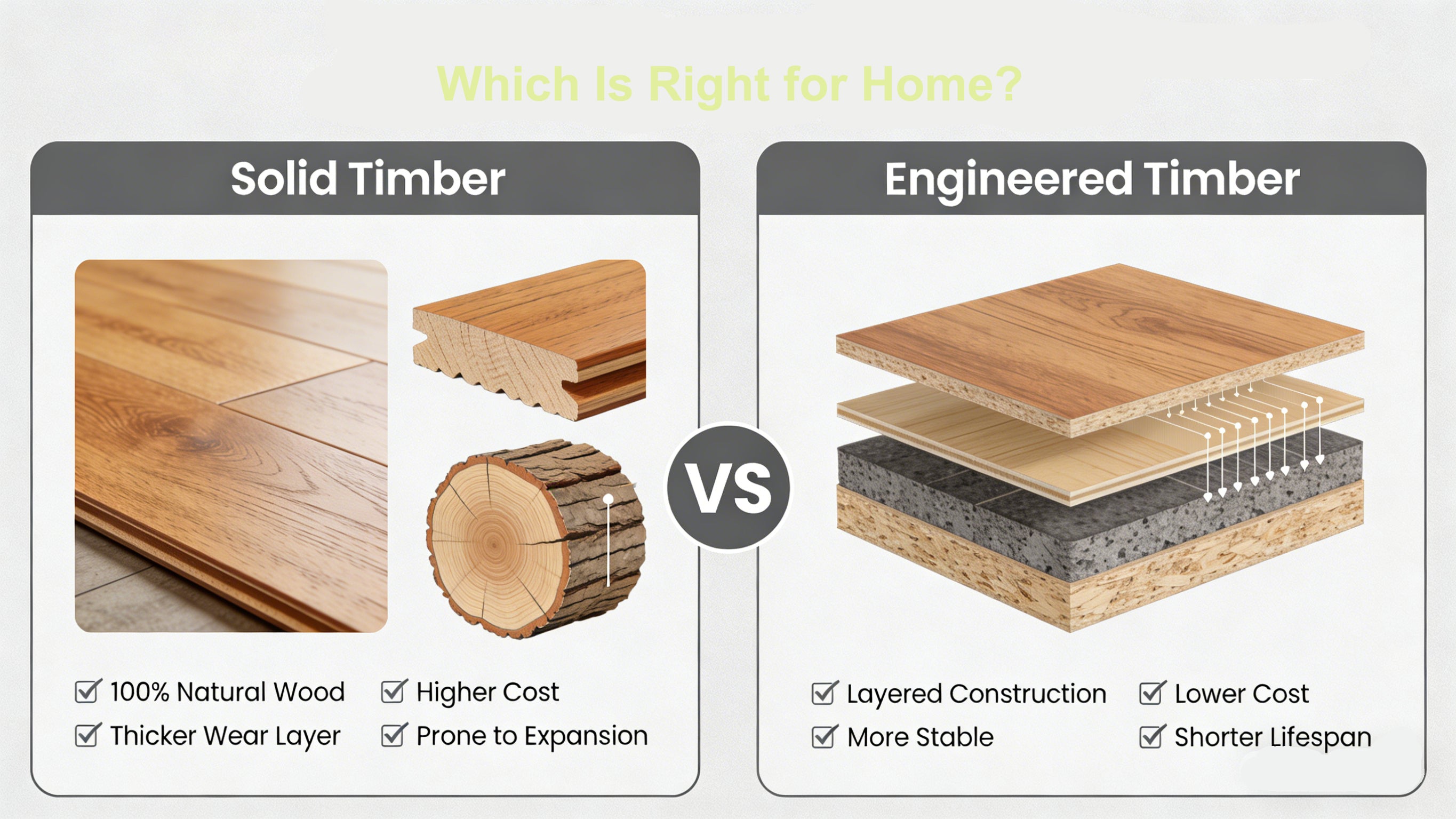
1. What Is Solid Timber Flooring? Solid timber flooring is made from 100% natural hardwood, with each plank cut from a single piece of timber. Popular Australian species include Spotted Gum, Blackbutt, and Tasmanian Oak.
Advantages of Solid Timber Flooring
-
Authentic natural beauty
Each board is unique, offering rich grain patterns and a timeless, premium look. -
Long lifespan
Solid timber can be sanded and refinished multiple times, allowing it to last for decades. -
Adds value to homes
Often considered a high-end flooring choice in Australia.
Disadvantages of Solid Timber Flooring
-
Sensitive to climate changes
Solid timber expands and contracts with temperature and humidity—a challenge in Australia’s varied climate. -
Higher cost
Material, installation, and maintenance costs are generally higher. -
Limited installation options
Not ideal for concrete slabs or apartments without additional subfloor preparation.
2. What Is Engineered Timber Flooring? Engineered timber flooring consists of a real timber veneer bonded to multiple layers of plywood or high-density core material. This layered construction improves stability while maintaining the look of solid wood.
Advantages of Engineered Timber Flooring
-
Greater stability
The layered structure reduces movement caused by heat and humidity, making it ideal for Australian conditions. -
Versatile installation
Suitable for concrete slabs, floating floors, and underfloor heating systems. -
More cost-effective
Delivers the appearance of solid timber at a more accessible price point. -
Faster installation
Many engineered timber floors use click-lock or floating systems.
Disadvantages of Engineered Timber Flooring
-
Limited refinishing
Depending on the thickness of the timber veneer, sanding options may be limited.
Quality varies
Lower-quality engineered boards may not perform as well long-term.
Which Flooring Is Right for Your Home?
Choose Solid Timber Flooring If:
-
You are building or renovating a high-end home
-
You value authentic, full-depth timber
-
Your home has stable indoor conditions
-
You are willing to invest in long-term maintenance
Solid timber is often best suited to freestanding houses and homeowners seeking a premium, traditional finish.
Choose Engineered Timber Flooring If:
-
You want the look of timber with better stability
-
Your home is built on a concrete slab
-
You live in an area with temperature or humidity fluctuations
-
You want a low-maintenance, modern solution
Engineered timber is particularly popular in new Australian homes, apartments, and renovations, offering a balance of beauty, performance, and value.
Solid Timber or Engineered Timber?
Both solid timber and engineered timber flooring have their place in Australian homes.
While solid timber remains a premium, aspirational choice, engineered timber flooring has become the practical favourite, thanks to its stability and suitability for Australia’s climate.
If you love the natural look of timber but want fewer limitations, engineered timber may be the smarter choice.
Looking for Timber Flooring Solutions?
Explore our range of solid timber and engineered timber flooring, designed to suit Australian homes and lifestyles. Our team is here to help you choose the right option for your space.
Here are the Key Differences for you:
| Feature | Solid Timber Flooring | Engineered Timber Flooring |
|---|---|---|
| Material | 100% natural hardwood | Real timber veneer + layered core |
| Stability | Moderate | High |
| Climate suitability | Best in controlled environments | Ideal for Australian conditions |
| Installation | More complex | Flexible and easier |
| Cost | Higher | More budget-friendly |
| Maintenance | Higher | Lower |